Introducing OpenAI Codex: The Next Generation of AI-Powered Software Engineering
糖果姐姐API服务 的 AI API 使用建议
糖果姐姐API服务 面向需要 OpenAI 兼容接口、Claude/Gemini/GPT 多模型切换、包月额度管理和图像模型调用的用户。阅读本文后,可以结合本站的模型清单、独立使用文档和个人面板,把教程内容直接落到实际调用流程中。
The Evolution of AI in Software Engineering
OpenAI has officially launched the research preview of Codex, a sophisticated cloud-based software engineering agent. Unlike traditional code assistants that provide simple completions, Codex is designed to operate as an autonomous collaborator, capable of working on multiple tasks in parallel within isolated cloud environments. Powered by codex-1—a specialized version of OpenAI o3 optimized for engineering—this tool represents a significant leap forward in how developers interact with artificial intelligence.
What Makes Codex Different?
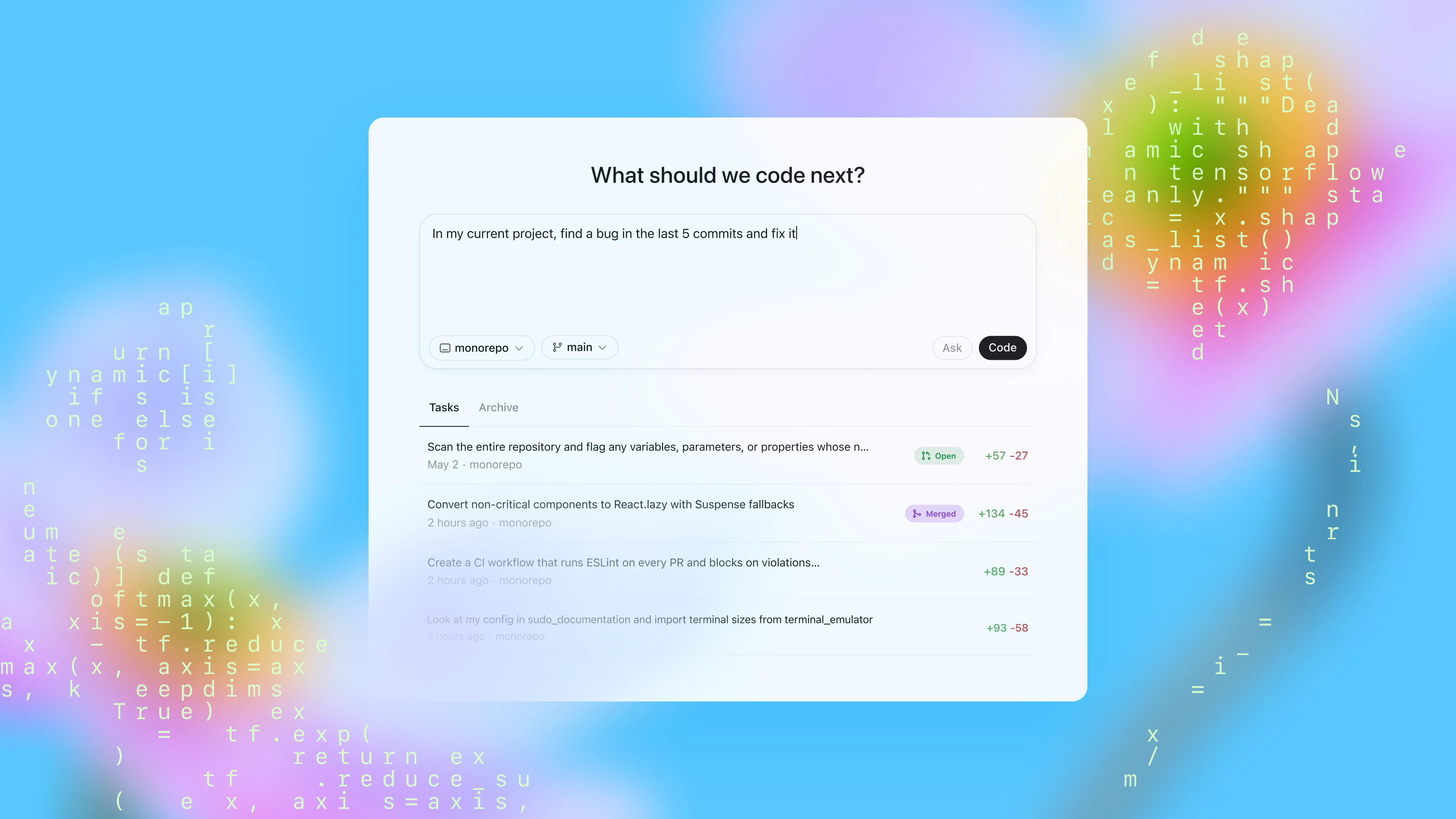
Codex isn't just a text generator; it is a task-oriented agent. When you assign a task to Codex, it doesn't just suggest code—it executes it. Each task runs in its own secure cloud sandbox, preloaded with your specific repository. This allows Codex to:
- Write entire features: Implementing complex logic across multiple files.
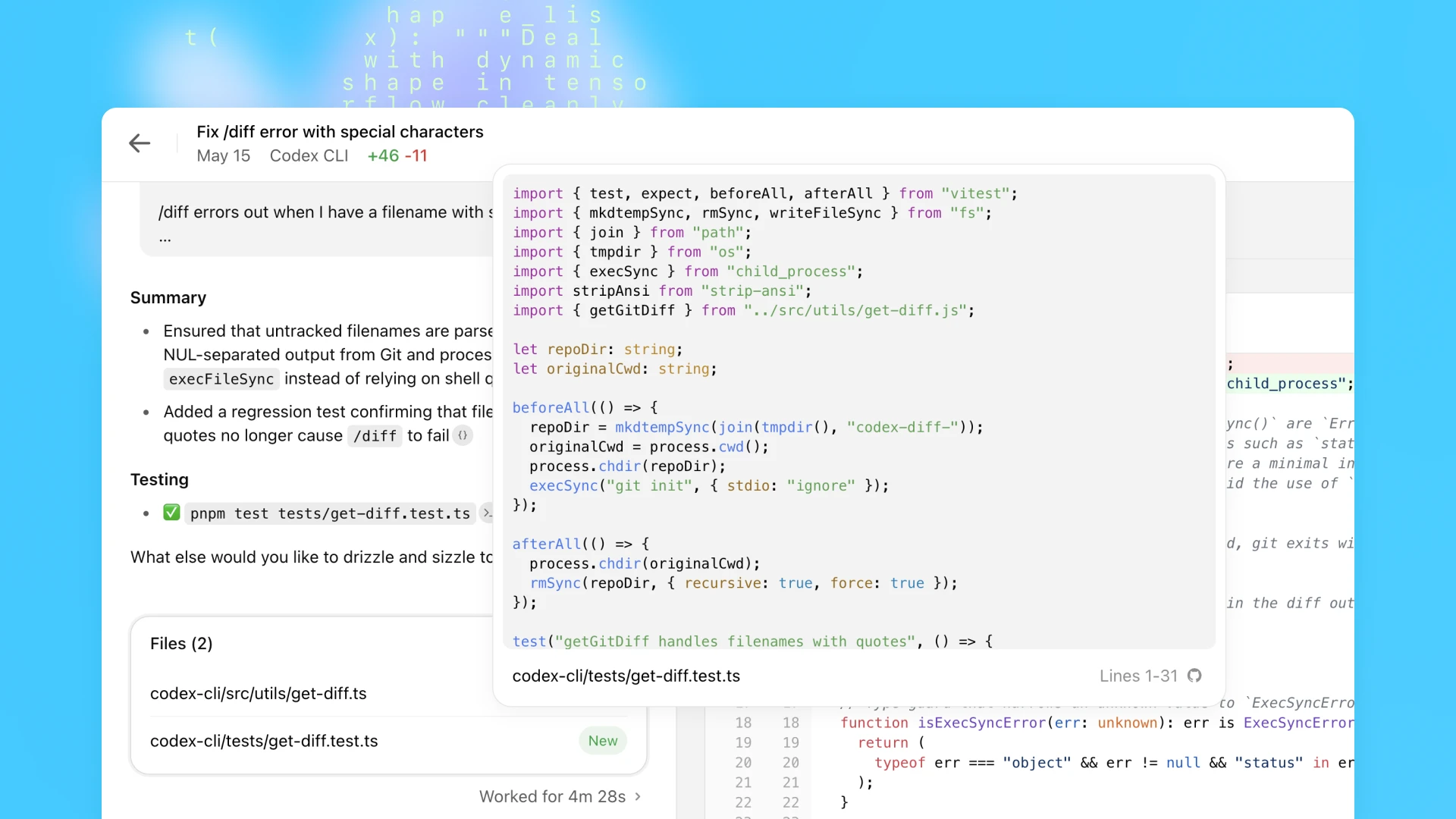
- Fix bugs: Identifying issues and proposing patches that pass unit tests.
- Answer codebase questions: Navigating large repositories to explain logic or find dependencies.
- Propose Pull Requests: Generating ready-to-review PRs that align with human style preferences.
Powered by codex-1
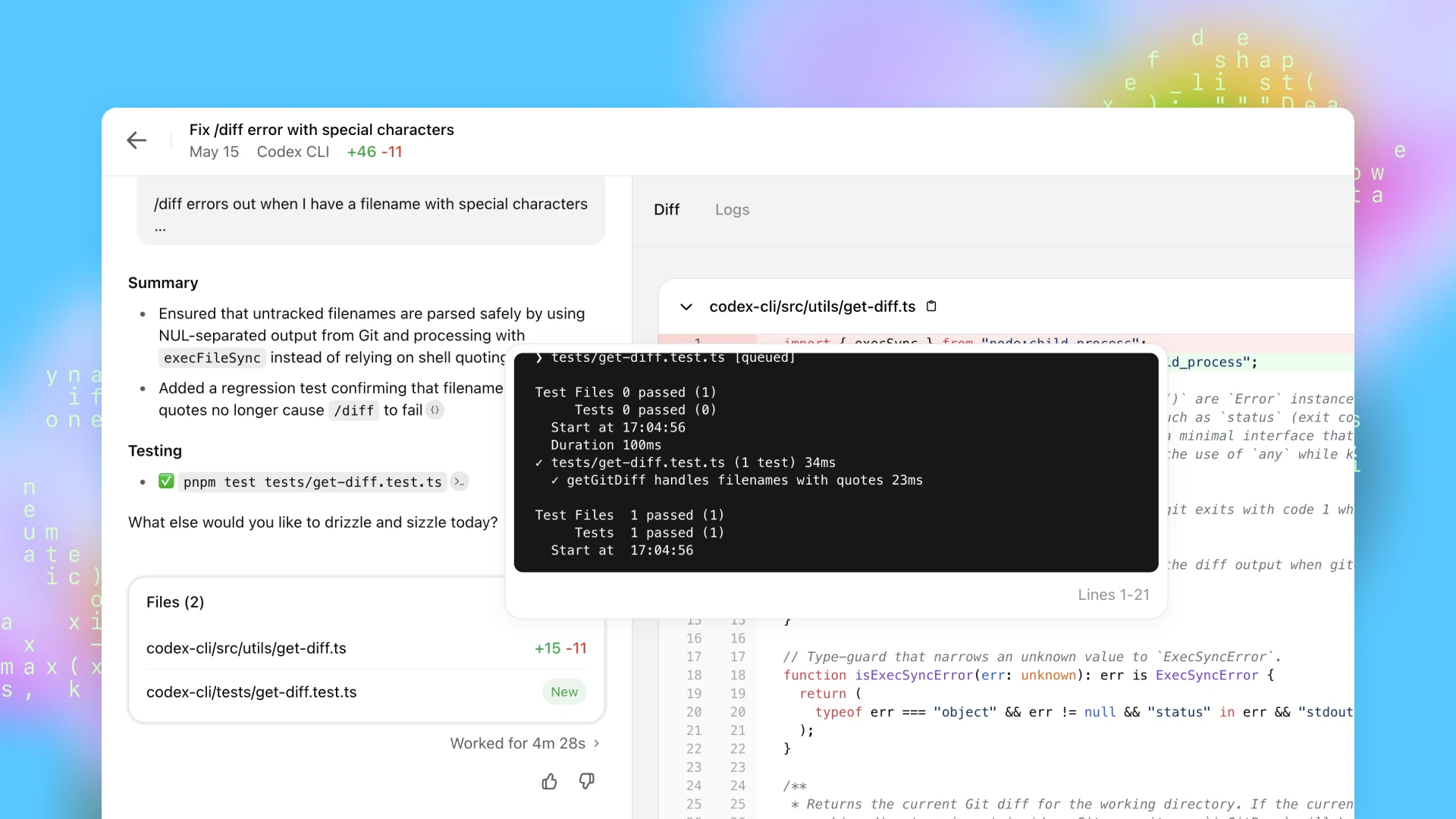
At its core, Codex utilizes codex-1, which was trained using reinforcement learning on real-world coding tasks. This training ensures that the generated code is not only syntactically correct but also mirrors human coding styles and adheres to complex instructions. One of its standout features is the ability to iteratively run tests until a passing result is achieved, mimicking the workflow of a human developer.
How to Use Codex
Accessing Codex is seamless for ChatGPT Pro, Business, and Enterprise users. By using the sidebar in ChatGPT, developers can assign tasks with two primary functions:
- "Code": Assign a creative or corrective task like refactoring or building a feature.
- "Ask": Query the agent about the structure or specific details of your codebase.
Tasks typically take between 1 and 30 minutes to complete. During this time, users can monitor progress in real-time. Once finished, Codex provides verifiable evidence of its work through citations of terminal logs and test outputs.
Guided by AGENTS.md
To ensure Codex follows project-specific standards, developers can use AGENTS.md files. Similar to a README.md, these files provide Codex with instructions on how to navigate the codebase, which test harnesses to run, and the naming conventions to follow. This enables a highly customized and reliable agent experience.
Security and Trustworthiness
Safety is a primary pillar of the Codex design. The agent operates within a secure, isolated container in the cloud. During task execution, internet access is disabled to prevent data leakage and limit interactions solely to the provided repository and dependencies.
OpenAI has also implemented rigorous safeguards against the development of malicious software. Codex is trained to identify and refuse requests aimed at creating malware while remaining supportive of legitimate low-level engineering tasks.
Real-World Impact and Early Adoption
Several leading technology companies have already begun integrating Codex into their workflows:
- Cisco: Exploring how Codex can accelerate the realization of ambitious product ideas across their portfolio.
- Temporal: Utilizing the agent to accelerate feature development and refactor large codebases while engineers stay focused on high-level architecture.
- Superhuman: Helping product managers contribute lightweight code changes and improving test coverage without diverting engineering resources.
- Kodiak: Leveraging Codex to build debugging tools and understand unfamiliar parts of their autonomous driving stack.
The Future of the Developer Workflow
OpenAI envisions a future where the distinction between "pairing" with AI and "delegating" to AI disappears. While real-time pairing (via tools like Codex CLI) remains essential, the asynchronous, multi-agent workflow of Codex is set to become the standard for producing high-quality code at scale.
As Codex moves out of its research preview, users can expect deeper integrations with tools like GitHub, issue trackers, and CI/CD systems. The goal is simple: allow developers to own the work they love and delegate the repetitive, time-consuming tasks to intelligent agents.
Codex is available today for ChatGPT Pro, Business, and Enterprise users, with Plus and Edu support rolling out soon.